It’s been around ten years since Grant Ranch has done silage so getting back into it has been interesting. It’s been an all hands on deck ordeal for the past four days and luckily the weather has cooled off enough at times to work with it. Silage is made from green foliage crops that has been chopped and fermented. It’s typically fed to cattle during the winter season when they rely more heavily on crops prepared in the summer/fall as grass isn’t an option.
There’s a lot of work and effort that goes into covering the piles. We tend to start by finding the center of the pile by measuring and lining stakes down it so we know where to drape the tarp, ensuring that both sides are equally covered. The hardest part of covering the silage is pulling the tarp from end to end, it gets heavier the further you pull from the roll and no matter how far apart those pulling are from one another, it really only moves if someone is by the roll pulling from the beginning.
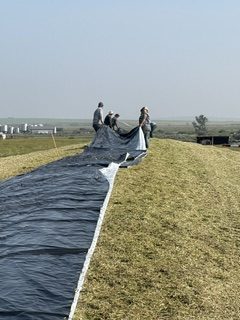
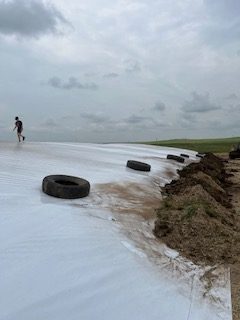
Opening the tarp is something that is done very carefully; one, so you don’t trip while walking down the side, and two, so it’s spread evenly and we have enough extra tarp on both sides. Once we confirm that the tarp is even all around and is laying flat with no air bubbles, we place tires to hold it down and put compost around the edges so there won’t be any spoilage. When the tires and compost are being put on, the tarp needs to be pulled tight to minimize the chances of air getting in and spoiling the silage.
Pulling a tarp tight while a mixture of manure and other biodegradable items are being dumped right next to your face is not the most enjoyable experience, especially when it’s the first thing you do in the morning and a shower is hours away.

We have four piles of silage, three at the yard and one out at a different yard site. They were covered on the morning and evening of the twenty-first, the morning of the twenty-second, and the evening of the twenty-third as we tried to avoid the bugs and the heat. While it was still a tad bit on the warm side it wasn’t nearly as close to the plus 30 temperatures we got in the middle of the day.
As it has been so long since the last time we did silage, there were a couple issues we faced. Hauling our tires and compost took a good amount of time to complete, but it was a necessary thing we needed before we could start. On our pile out at the second yard site we found that it was too wide in comparison to the tarp, so we had to brainstorm a way to fully cover both sides. We ended up cutting off the excess tarp we had from the west end and taped it the length of the south side where we needed an extra amount. Although it was a tad bit unconventional, it worked enough for us to put compost on the edge of it and stop any spoilage.
Even though it took a while to get completed, it’s a relief knowing that we will have a good winter feed ready for our cattle when the time comes.