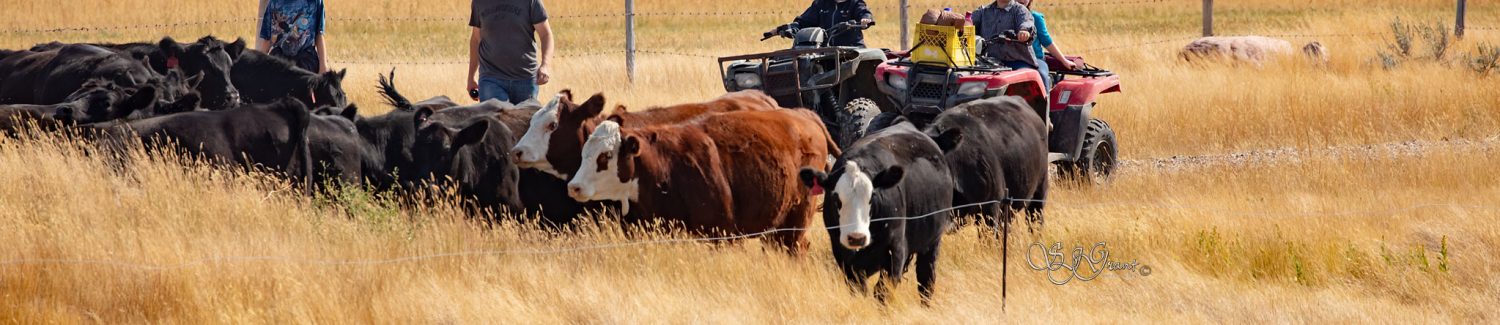
Things have picked up as harvest lays right around the corner, it’s gotten busy enough that we recruited an extra pair of hands early on in the week.
What a hike
The heifer pairs have been rotating around through five different fields since they finished calving about two months ago, so once they finished grazing the final pasture we geared up and rolled out early in the morning to move them eight kilometres north.
As we started gathering we were on the lookout for a calf with a bad knee as it was evident he wouldn’t be able to complete the move in one day. While we were keeping an eye out for him we noticed a second calf with the same knee problems so we penned the both of them so they could be trailered out and kept gathering. Now, the day started gloomy with a chance of rain, some of us were prepared with our rain gear, so when the rain started to come down two of us were fine, the third not so much. Another thing to always bring with you no matter what is rain gear, especially when it’s calling for a chance of rain.
We didn’t have many issues throughout our cattle drive, they all moved fairly nicely and even the bulls decided to tone it down on the fighting for the day. Our only real issue occurred when we were trying to go straight across a grid road, because going straight across is boring and not fun apparently. What’s the point of going by a road if you’re not going to go down it? Luckily once we got past it, the remainder was smooth sailing. We finished the move in good time, checked water, checked the field for open gates and bad fence, treated those two slow moving calves, and finished up our day with a pat on the back.

Heifer bulls
Our heifers bulls were put in on July 10th after we separated our breeding heifers from the market heifers. We left them with the yearlings for a little over one cycle (twenty-one days). 80% (CHECK THAT) of the yearlings should be bred by then, which means the ones that get bred are the most fertile and those are the ones we really want. So once twenty-six days had passed we came back to sort off the bulls to load and haul ’em out.
On Tuesday three of us went out to sort off the bulls. With three we minimize the places a bull could run to if he decides he doesn’t want to leave the ladies as we have one rider on either side and a third pushing from behind.
We had eleven bulls to pick up and fit into two trailers. We had some bulls that really fought to stay and others that moved better but there was still effort going in to moving them, but mostly it was the heifers that kept getting in the way as they were curious to see what was happening. We would move a bull or a couple bulls with a heifer in heat from the pasture to the water trough area where we had things set up to load. But, of course, as soon as you start moving one, they all need to come. At least the heifers coming down to see all the hubbub meant that the rest of the bulls came with, which meant that we had all the bulls in the area we needed them to be in … just with a lot more heifers than what was wanted.
Once the bulls were corralled and the heifers were sorted out, loading them actually wasn’t half bad. While they still needed some encouragement, none of them were fighting being loaded up. We took seven out in one trailer to get dropped off at the bull pasture and the other four were put in so that two could be unloaded at the yard and the other two could be taken out to the two year olds, both of which seemed pretty happy about that trade.

Reunited
Since the bulls were removed we were then able to move the market heifers back in with the breeding ones to make it easier to check on them all. Of course the market yearlings are telepathic and knew that we were coming to gather and move them because they were in the furthest and most difficult corner of the field to get to. The only time you’ll find yearlings being smart is when they know it’ll inconvenience you.
Whilst the yearlings were being moved we made sure to keep an eye out for any with foot rot. Foot rot is an infection in the hoof that causes pain while walking and makes them move a lot slower, it can be spread to other cattle that are around the animal with the infection. It’s best to catch and treat foot rot early as it’s a lot less painful for the animal, makes it less likely for a need for a second treatment, and others are less likely to catch it.
We passed by corrals on our way up to the breeding heifers so while we had the opportunity, all the market yearlings were brought in and those with foot rot were sorted off and treated. Those with foot rot remained in the field with the corrals to be easily monitored and the rest of the market heifers were taken the rest of the way up to the breeding heifers.

The hustle and bustle of farm life never ceases, there’s always something to be done and always something after that needs doing. That’s what this past week has certainly felt like, but we finished the priority list, and that’s what matters.